

How Long Does SEO Take to Work for a UK Business?
If you're investing in search engine optimisation (SEO), one of the first questions you're likely to ask is: how long does SEO take to work?
It's a reasonable question. After all, if you're spending money improving your website's visibility on Google, you'll want to know when you can expect to see results.
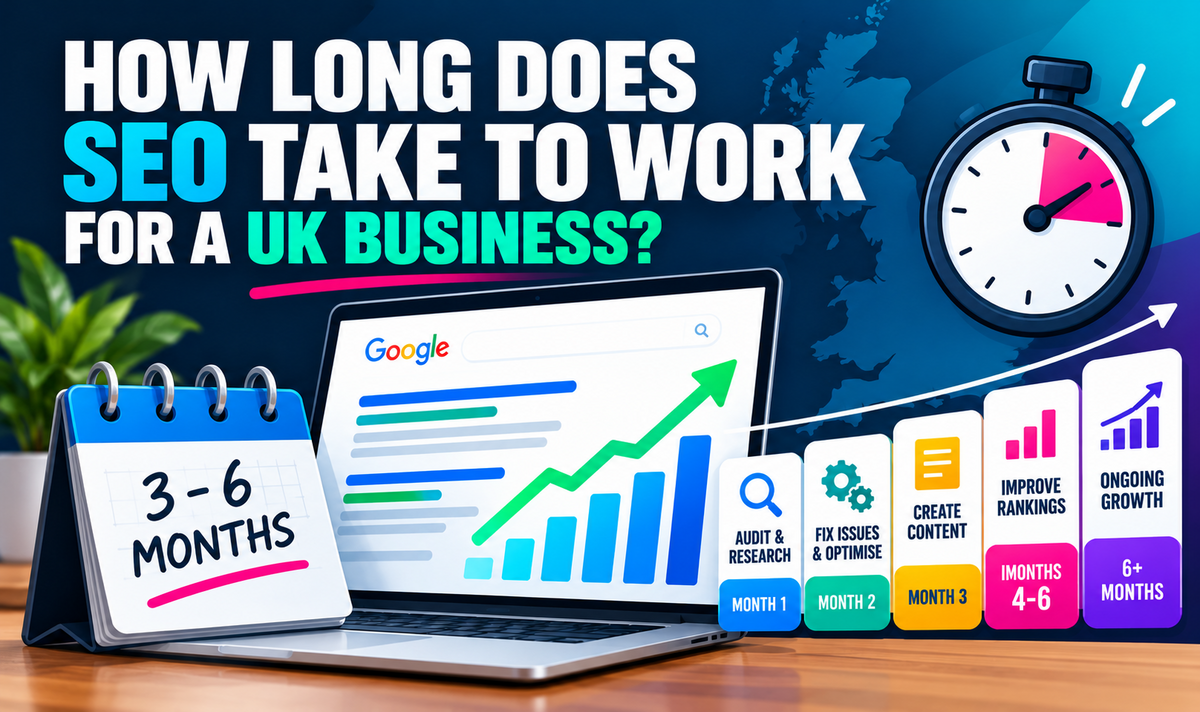
For most UK businesses, SEO typically takes three to six months to start showing meaningful progress, while more competitive industries may require six to twelve months or longer to achieve substantial improvements.
However, SEO isn't an overnight solution, and the timescale depends on several factors, including your website's current performance, competition and the amount of work being carried out.
Let's look at what you can realistically expect from an SEO campaign and why some businesses see results faster than others.
Why Does SEO Take Time?
Unlike Google Ads, where your adverts can begin appearing shortly after a campaign launches, SEO focuses on improving your website's organic visibility over time.
Search engines need to discover, crawl and evaluate your website's content before changes can influence search rankings.
SEO also involves improving several different areas of your website, including:
- Technical performance and website structure
- Keyword targeting and on-page optimisation
- Website content and relevance
- Internal linking
- Backlinks and website authority
- User experience and mobile usability
These improvements work together to help search engines understand your website and determine when it should appear in relevant search results.
What Results Can You Expect in the First Six Months?
Every SEO campaign is different, but the following provides a general idea of how progress might develop.
| Timescale | Typical SEO Activities and Progress |
|---|---|
| Month 1 | Website audit, keyword research, competitor analysis and technical fixes |
| Month 2 | On-page optimisation, content improvements and internal linking |
| Month 3 | Early ranking movements and improvements in search visibility may become noticeable |
| Months 4–5 | Potential growth in organic traffic as improvements begin to take effect |
| Month 6 | Review progress, identify successful keywords and refine the ongoing strategy |
| Months 6–12+ | Continued optimisation, content development and opportunities for further growth |
These are illustrative stages rather than guaranteed results. Some websites may respond more quickly, while others require significantly longer.
1. Your Website's Current Condition
The starting point of your website plays a major role in how quickly SEO improvements can take effect.
If your website already has a strong technical foundation, relevant content and some established Google rankings, improvements may be easier to achieve.
However, websites with significant technical problems may require more initial work.
Common issues include:
- Missing or duplicate page titles
- Broken links and incorrect redirects
- Poor website structure
- Missing meta descriptions
- Incorrect indexing settings
- Thin or outdated content
- Poor internal linking
Addressing these issues can help create a stronger foundation for ongoing SEO.
2. How Competitive Your Industry Is
Some industries are considerably more competitive than others.
For example, a local business targeting a specialist service in Wolverhampton may face less competition than a national company targeting highly competitive keywords across the UK.
If your competitors have established websites, strong content and extensive backlink profiles, achieving higher rankings may take longer.
Our advice: Focus on a mixture of realistic short-term opportunities and more competitive long-term keywords.
3. The Age and Authority of Your Website
An established website with a history of relevant content and quality backlinks may have an advantage over a brand-new website.
New websites often need time to build visibility and credibility within their market.
However, website age alone doesn't guarantee strong rankings.
The quality of your content, technical performance and relevance to users remain important considerations.
4. The Quality of Your Website Content
Content plays a significant role in SEO.
Search engines aim to provide users with relevant, helpful information that answers their questions.
If your website contains limited or outdated content, it may struggle to compete against businesses offering more comprehensive information.
Creating useful service pages, industry-specific landing pages, FAQs and blog articles can help your website target a wider range of relevant searches.
However, publishing more content doesn't automatically improve rankings. Quality, relevance and usefulness are far more important than quantity.
5. How Much SEO Work Is Being Carried Out?
The amount of work completed each month can influence how quickly improvements are implemented.
For example, a campaign involving technical optimisation, content development and regular performance reviews may progress differently from one with a very limited monthly budget.
However, spending more doesn't automatically guarantee faster rankings.
A successful SEO campaign needs a clear strategy that prioritises the improvements most likely to benefit your business.
Can SEO Work in Less Than Three Months?
Yes, some improvements can happen relatively quickly.
For example, fixing an indexing issue could allow an important page to begin appearing in search results.
Similarly, improving an existing page that already ranks reasonably well may produce earlier results than trying to rank a completely new page for a highly competitive keyword.
However, these early improvements shouldn't be confused with achieving consistent long-term SEO growth.
How Do You Know If Your SEO Is Working?
One of the biggest mistakes businesses make is judging SEO performance purely by whether they're ranking number one on Google.
While keyword rankings are useful, they don't tell the whole story.
A professional SEO campaign should monitor several important measurements.
Organic Traffic
Are more people finding your website through unpaid search results?
Increasing relevant organic traffic can indicate that your website is becoming more visible.
Keyword Rankings
Are your important service and product pages improving their positions for relevant searches?
Ranking improvements can be an early indication that your SEO strategy is moving in the right direction.
Search Impressions and Clicks
Google Search Console can show how often your website appears in search results and how many people click through.
These measurements can help identify improvements in visibility before substantial traffic growth occurs.
Enquiries and Conversions
Ultimately, the most important question is whether SEO is helping generate business.
More traffic is useful, but attracting relevant visitors who become enquiries and customers is the real objective.
Is SEO a One-Off Job?
Although some technical SEO issues can be resolved through a one-off project, ongoing SEO is usually necessary for businesses operating in competitive markets.
Competitors continue improving their websites, search behaviour changes and new opportunities emerge.
Ongoing SEO can involve:
- Reviewing keyword performance
- Updating and improving existing content
- Creating new service pages and blog articles
- Monitoring technical website health
- Improving internal linking
- Reviewing competitor activity
- Identifying new keyword opportunities
Regular optimisation helps maintain and develop your website's visibility over time.
Is SEO Worth the Wait?
For many businesses, SEO can become an important source of enquiries and website traffic.
Unlike paid advertising, where visibility generally stops when you stop paying for adverts, well-optimised website content can continue attracting organic visitors after the initial work has been completed.
However, rankings can change, and maintaining performance may still require ongoing investment.
The real value of SEO comes from building a sustainable source of relevant traffic that supports your business over the long term.
How Can You Improve SEO Results Faster?
Although there's no guaranteed shortcut to the top of Google, there are ways to make your SEO strategy more effective.
Start by prioritising the areas that could have the greatest impact.
For example:
Fix technical issues preventing important pages from being indexed
Improve existing pages that already have some search visibility
Target relevant keywords with realistic competition
Create useful content around your core services
Strengthen internal links between related pages
Monitor results and adjust your strategy regularly
A focused approach is generally more effective than making changes without a clear plan.
Looking for SEO Services in the West Midlands?
At West Midlands Media, we've been helping businesses improve their websites and digital marketing since 2006.
Based in Wolverhampton, we provide SEO services to businesses throughout the West Midlands and across the UK.
Our approach focuses on identifying opportunities, improving website performance and developing strategies designed to attract relevant visitors and generate more enquiries.
Whether you're starting SEO for the first time or looking to improve an existing campaign, our team can help you understand where your website currently stands and what improvements could make a difference.
Want to know how your website is performing on Google?
Contact West Midlands Media for a free SEO audit. We'll review your website, identify potential issues and provide practical recommendations to help improve your search visibility.